Recovery is the part nobody tracks
U.S. Air Force photo by Staff Sgt. Kate Thornton. Public domain.
High performers handle extreme days well. Heart rate, hormones and attention all rise to meet the demand, then settle back afterwards. If the next demand arrives before that settling finishes, the shortfall carries over. Repeat this for years and the level a person returns to gets lower each time.
Physiologists call this allostatic load: the accumulated cost of adapting without restoring.11 In practice it appears as injuries, as people who are present but no longer sharp, and as careers that end early.
Illustrative, not measured
The cost shows up in lost duty, then in lost people
Musculoskeletal injury is the largest recorded cause of lost duty. In 2018 it accounted for more than eight million limited-duty days in the US Army and 65% of soldiers who were medically unable to deploy. About 4% of the force, those on long injury profiles, carried roughly half of those days.12 It featured in nearly 70% of Army medical disability discharges between 2011 and 2016, and in more than 90% of those in a soldier’s first year of service.1
The UK sees the same pattern before deployment. At the Infantry Training Centre, Catterick, 39.1% of recruits were injured over four years, and almost half of those injuries happened in the first eight weeks. Overuse was the most common type and drove most of the medical discharges.3 After rehabilitation, 58% were back to full fitness at two years.4
The US figures show the scale of the pattern in a large allied force. They are not a count of British personnel.
Musculoskeletal injury, published shares
Share of musculoskeletal limited-duty days carried by the 4% of US Army soldiers on profiles longer than 90 days in six months
51%
Share of medically non-deployable US Army soldiers whose cause was musculoskeletal
65%
Share of US Army disability discharges, 2011 to 2016, involving musculoskeletal injury
nearly 70%
Share of special operations operators with at least one sports-type injury in a year
more than half
Sources: Molloy et al., Military Medicine, 202012; Dahl et al., Translational Sports Medicine, 20216. “More than half” is drawn as a bar for readability and is not a precise 55.
Training causes much of the damage
U.S. Marine Corps photo by Sgt. Samuel Qin. Public domain.
Special operations and explosive-ordnance personnel train like elite athletes, carry heavy loads and are exposed to blast in training as well as on operations. Trainees are the highest-risk group in the injury literature, with up to 68% injured in a single training period. Physical training was the activity most often linked to injury, at up to 80% in some cohorts.5 Shoulder, lower back and knee injuries are the most common.6
Being fit doesn’t protect against overload. What matters is this week’s load compared with last month’s, and whether sleep and food have held up underneath it. Prior injury is the strongest predictor of the next one, so a cleared ankle doesn’t mean the person is ready for the next serial.
Bloods can look recovered while the person isn’t
Norwegian naval special operations apprentices went through a week of training on two to three hours of sleep a night. Testosterone fell about 70%, cortisol rose about 154%, and the ratio between them dropped about 87%. Jump height fell 28%.7
After a week of rest, the hormones had largely settled, though cortisol was still 43% elevated. Jump height was 14% below baseline after fourteen days. A blood panel taken at that point would have looked fine, and the operator still wasn’t back.7
Norwegian naval special operations apprentices
Jump height
Start
Baseline
End of the week
Testosterone −70%, cortisol +154%
After a week of rest
Largely settled, cortisol +43%
14 days later
Blood panel looks fine
Testosterone fell about 70% in the same week and largely returned within seven days. Jump height did not.
Fourteen days later
Blood panel
Looks fine
Jump height
14% below baseline
US Army Special Forces operators showed the same pattern before the stress even began. They arrived at a five-day winter warfare course with cortisol 152% above their home baseline and testosterone already low. By the end, testosterone had fallen a further 47% and leptin had collapsed.8 The load comes from the whole job around the serial, and the serial is only part of it.
US Army Special Forces, winter warfare course
100
Home baseline
77
Course start
Cortisol +152%
41
Course end
Over a career, small shortfalls add up
Across a career
- Full recovery
- Incomplete recovery
- Margin lost
One hard course works as a selection tool. A career repeats it: courses on top of deployments, nights away from base, cold, heat, blast, and a culture where being tired is part of the job. Clinicians working with long-serving special operations personnel describe a recurring cluster of disrupted hormones, broken sleep, chronic pain and cognitive wear. They call it operator syndrome. It is a pattern observed in people, and it is not a formal diagnosis.12
Operator syndrome12
Observed pattern, not a diagnosis
Disrupted hormones
Broken sleep
Chronic pain
Cognitive wear
Age doesn’t create the load, but it shrinks the margin for recovering from it. In an operational US Army brigade, personnel aged 36 and over had about twice the injury odds of those aged 24 and under, after adjusting for body mass.14 Across military studies, the oldest groups carried about 22% higher musculoskeletal injury risk.15 These experienced people are the ones a force most wants to keep, and a single annual medical tends to catch problems in them too late.
Performance drops before anyone is injured
U.S. Army photo by Paolo Bovo. Public domain.
Limited-duty days are counted, but the larger loss is the person who is still on duty and performing below standard. Twenty-four hours without sleep is associated with a 25 to 35% drop in cognitive task performance. In one study, a single night without sleep degraded basic flying skill by more than 40%.10
Performance retained, against rested
Cognitive task performance after 24 hours awake
−25 to 35%
Basic flying skill after a single night without sleep
>40%
01
25–35%
Drop in cognitive performance after 24 hours awake.
02
Marksmanship
Speed and accuracy fall after nights without sleep.
03
Judgement
Confidence can stay high while precision declines.
Repeated blast may also change the brain while a standard scan stays clean. In active-duty US special operations personnel with at least a decade of exposure and no recorded moderate or severe traumatic brain injury, higher cumulative blast exposure was associated with structural brain changes and lower health-related quality of life.13 No field test tells a unit when someone is in a vulnerable window, and comparing them with the general population misses it, because their own normal sits above the average they are scored against.16
Repeated blast, ten years or more
Standard scan
Stays clean
Higher cumulative exposure
Structural brain changes
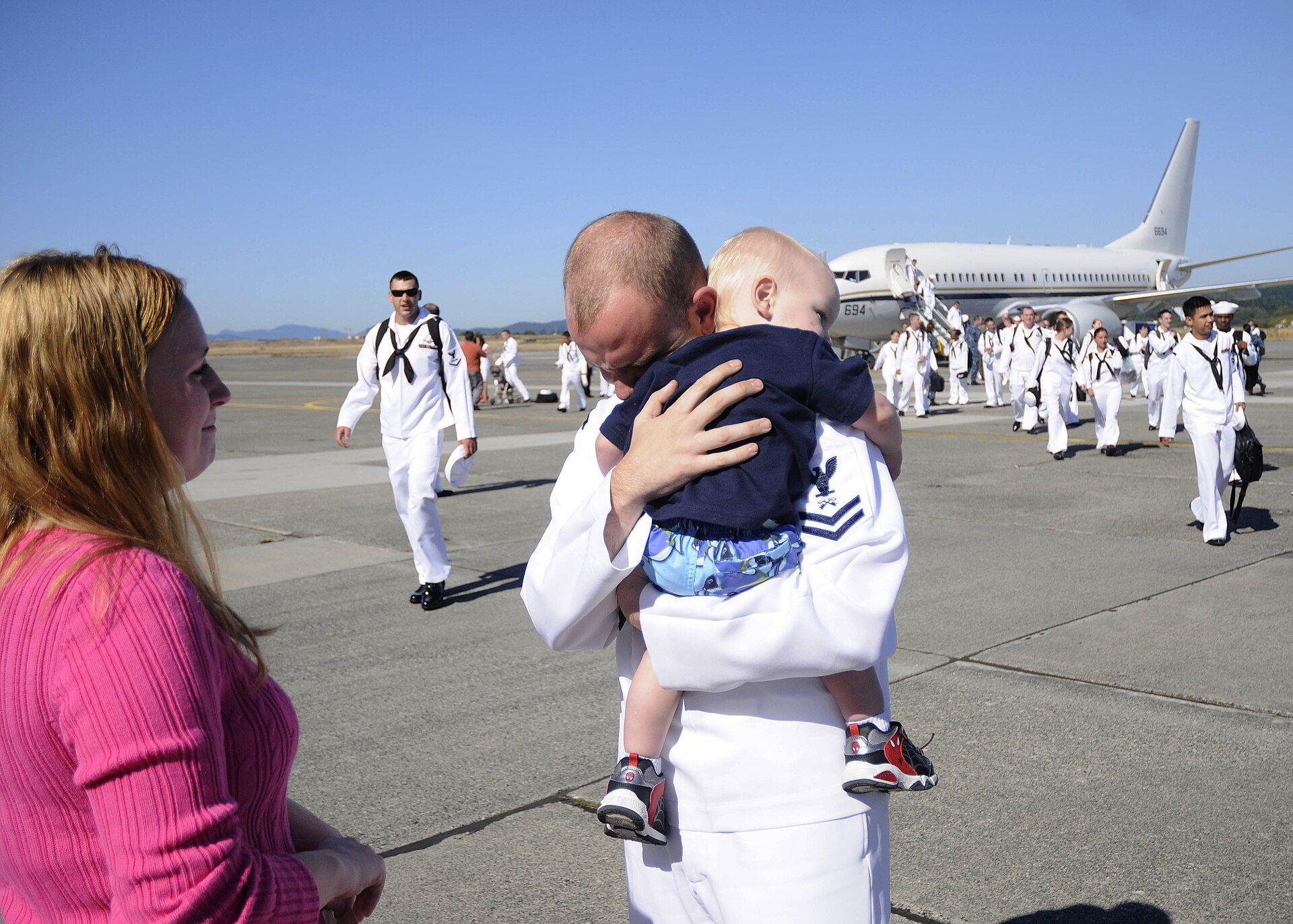
U.S. Navy photo by MC2 Nardel Gervacio. Public domain.
The cost reaches home life as well as the roster
The same physiology that costs a unit a training day also costs a person sleep, a good relationship and their sense of being well. Poor sleep in these communities tracks with lower job satisfaction, worse self-reported mission performance and lower readiness.9 Pain becomes the background. Hormonal disruption feels like depression or plain tiredness, and people keep going because that’s the culture. Under-reporting is part of the occupation, so the injury log never sees most of this.
When people do leave, the force loses years of experience. Another selection cycle brings in a replacement, and those who remain absorb more of the load. The problem feeds itself.
01People leave
02Years of experience go with them
03A selection cycle brings in a replacement
04Those who remain absorb more of the load
Current monitoring catches it too late
Units already do a lot: an annual medical, a wearable score, the occasional blood test, an injury log. But each is read in isolation, usually against a population range. Someone can move a long way from their own recovered baseline and still be told they’re normal.16 Resting hormones are often unremarkable in overtraining. What would have shown the problem was the change from that person’s own baseline, measured before the break.7
Illustrative, one year
Annual medical
Wearable score
Occasional blood test
Injury log
Illustrative, not measured
There is no simple test for the point where overload becomes damage, and none for repeated blast. Injury records undercount and often don’t record how the injury happened. As a result, the first reliable signal is usually the injury, the recycle, the downgrade or the mistake.
- Injury
- Recycle
- Downgrade
- Mistake
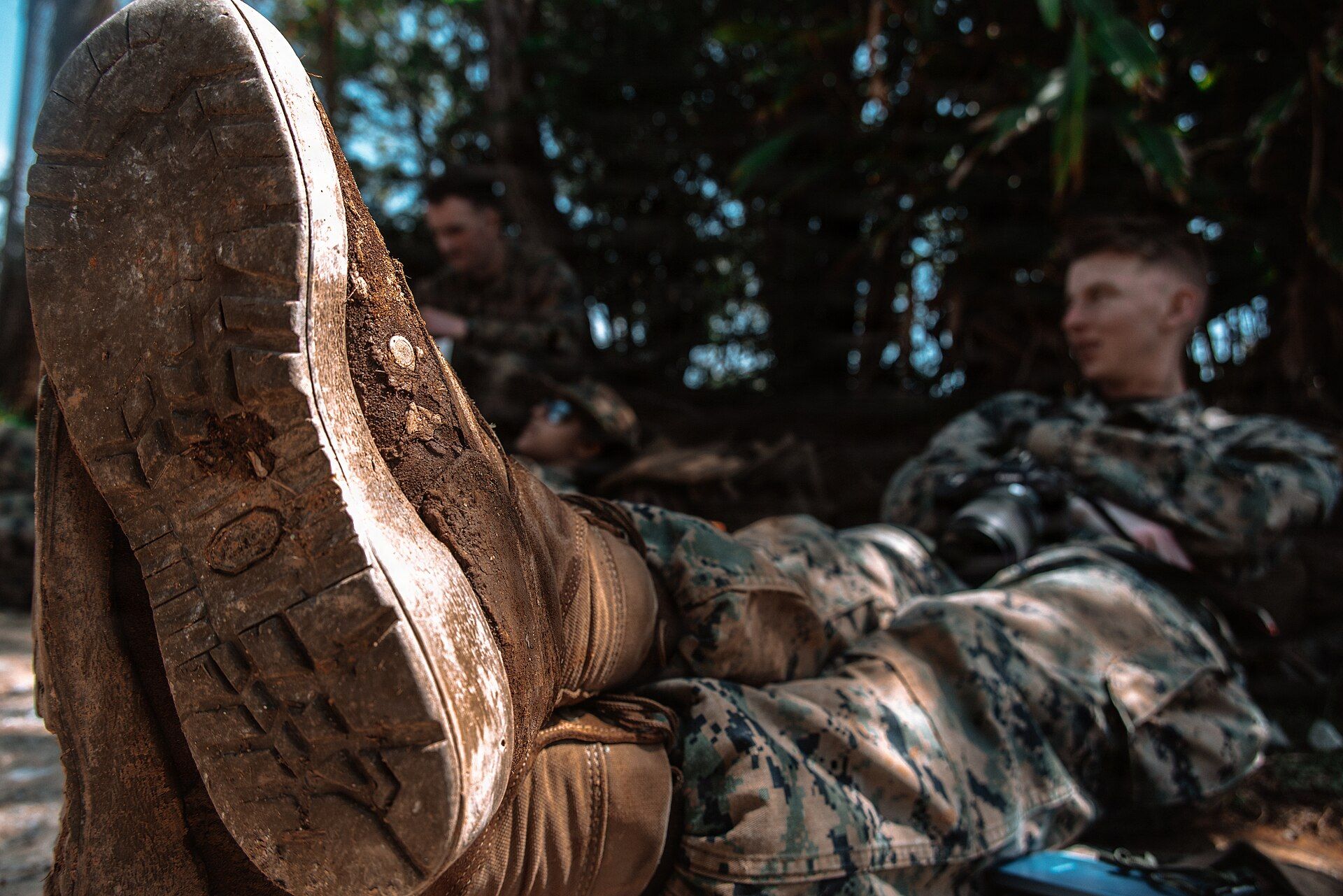
The work will stay hard. What a unit can change is how early it knows someone hasn’t come back, while there is still time to adjust the load.
U.S. Marine Corps photo by Cpl. Meshaq Hylton. Public domain.